

Local SEO Playbook for Service Businesses in Brazoria County
Let’s get real: local SEO for service businesses in Brazoria County isn’t about being the most famous name in town. Most nearby buyers just want someone available and trustworthy when they need help.
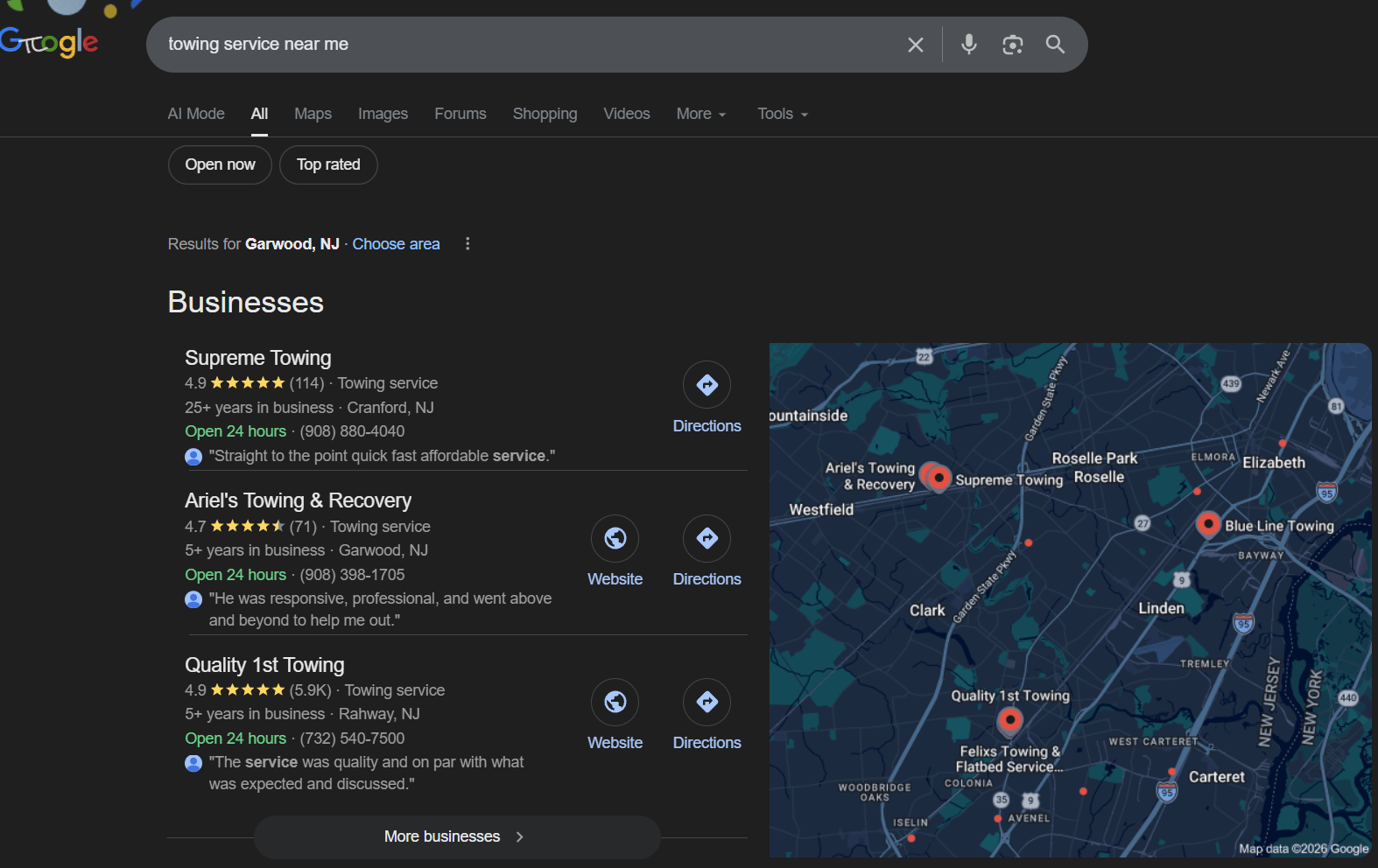
When a homeowner or business manager searches for help, Google Maps, the Map Pack, and local results usually shape who gets the call, the directions request, or the website visit.
For service businesses, local SEO only pays off if it brings more qualified calls from the right service area—not just more website visits. That means you’ve got to boost Google Business Profile visibility, make your service pages work harder, and pull in leads that actually matter.
If you want a practical local approach, that’s where a local specialist like SEO My Website Guru comes in. They focus on Google Business Profile optimization, clear reporting, and offer a 30-Day Results Guarantee based on real, measurable progress.
Key Takeaways
- Local SEO pays off when it improves qualified leads.
- Google Maps visibility depends on relevance, distance, and prominence.
- Strong results need reviews, service pages, and clean reporting.
When Local Search Is Worth the Investment
Local search is worth the cost when people search with clear intent and act fast. Phrases like “near me,” “best,” “same-day,” or any service plus city combo usually mean someone’s ready to pick up the phone.
The real question isn’t about traffic volume. It’s whether those visitors turn into phone calls, direction requests, or booked jobs from the right neighborhoods.
How High-Intent Searches Turn Into Calls and Bookings
High-intent searches often lead to action right away. If someone needs emergency repair, a quote, or a same-day visit, they’ll pick from the first few local results and call whoever looks active, trusted, and nearby.
That’s why local searchers matter way more than just broad organic traffic. A handful of qualified visitors can easily beat a flood of general visitors if you want appointments, not just clicks.
Which Service Business Models Benefit Most
Service businesses with a set service area usually see the biggest return. Think plumbing, HVAC, landscaping, roofing, cleaning, pest control, legal, medical, and home repair—these folks’ buyers search locally and make decisions quickly.
If your business offers repeat service, high-value jobs, or handles urgent needs, you’ll probably see the clearest upside. When one good lead can mean hundreds or thousands of dollars, better local visibility is a no-brainer.
How to Judge ROI by Lead Quality Instead of Traffic
Traffic can trick you. If a campaign brings in visitors from outside your area, analytics might look great but you’ll waste time on weak leads.
Lead quality is a better test. Track calls, booked jobs, direction requests, and estimates from your target towns—then compare that with costs and your close rate.
How Google Maps Rankings Actually Work
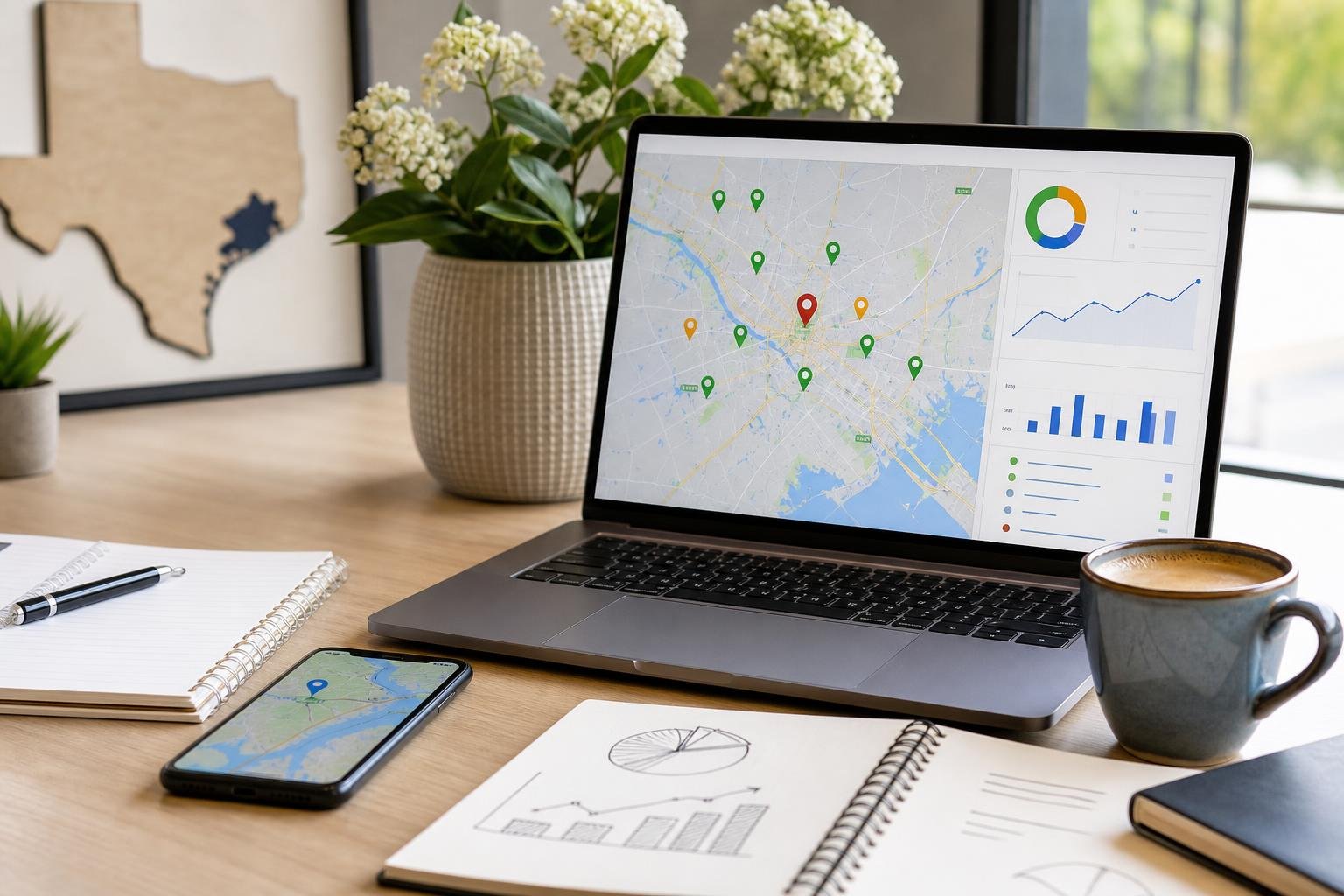
Google Maps ranking comes down to three things: relevance, distance, and prominence. Google looks at these to decide who pops up in the local pack and who gets buried.
For service-area businesses or storefronts, the goal’s the same: get seen by real buyers in the right places. How you get there depends on your service area, location type, and how solid your profile is.
Relevance, Distance, and Prominence Explained
Relevance is about how well your profile matches the search. A complete Google Business Profile with the right categories, services, and descriptions gives Google what it needs.
Distance is simply how close the searcher is to you. Prominence comes from reviews, links, citations, activity, and overall brand trust.
What Changes for a Service-Area Business vs Storefront
If you have a storefront, your address helps a ton. Service-area businesses (SABs) rely more on service areas and local trust signals—Google still wants proof you serve the market and do real work there.
Category choice, service pages, reviews, and citation consistency matter even more for SABs. If your profile’s vague or spread too thin, you’ll lose visibility fast.
How Service Area Choices Affect Visibility in Brazoria County
Your service area should match where you actually work—not just where you wish you did. If you’re based in Brazoria County and want to show up in nearby towns, keep your service area setup clean and believable.
Trying to cover too much territory weakens your relevance. Tighter coverage, backed by drive-time mapping and local content, usually means better map pack rankings and stronger leads.
Building the Right Foundation in Google Business Profile
A strong Google Business Profile gives search engines and customers what they need right away. It also boosts click-through rates because the listing looks complete, current, and trustworthy.
Your profile should connect to the rest of the web—Apple Maps, Bing Places, and major citations. If your basics are weak, search engines get mixed signals and your listings lose power.
Choosing the Primary Category and Secondary Categories
Your primary category should match your main money-making service as closely as possible. Secondary categories should back up related services, not distract from your core offer.
This choice affects how you show up in local results and which searches you can actually compete for. A precise category setup usually beats stuffing in extras that don’t fit.
Writing a Strong Business Description and Service List
Your business description should explain what you do, where you work, and who you help. The service list should be clear, specific, and easy to scan.
Google’s own GBP best practices guidance for service businesses says complete service info is a trust signal. If it fits, clear pricing notes can help filter out the wrong leads before they call.
Using Photos, GBP Posts, and Insights to Improve Engagement
Photos help people trust you before they even reach out. Real team photos, actual job shots, vehicles, and finished work will always beat generic stock images.
GBP posts and insights show what people click and how they interact. That data can guide your next updates—and it fits well with the dashboard-style reporting firms like SEO My Website Guru use to keep clients in the loop.
Avoiding Duplicate Listings and Weak Profile Signals
Duplicate listings only create confusion and water down your local authority. The same goes for inconsistent names, phone numbers, and addresses across directories.
Keep your profile and your web records clean. Check for duplicates, fix old entries, and keep your profile active enough to look legit.
Creating Service Pages That Rank and Convert
Service pages do double duty—they help you rank and they help you sell. A good page gives search engines context and gives buyers the trust to reach out.
This is where local keyword research, page structure, and user experience need to work together. Good pages answer real buyer questions, show proof, and make the next step obvious.
Local Keyword Research Around Service Plus City Queries
Searches like “service + city” are the bread and butter. They show clear intent and highlight which towns or neighborhoods matter most.
Use local keywords naturally. Don’t overdo it—nobody wants to read the same phrase a dozen times. You’ll rank higher and sound more human.
Structuring Service-Area Pages for Real Buying Intent
Each page should focus on one service and one clear buyer need. Don’t let your emergency repair page turn into a generic homepage.
Good pages explain the problem, the process, the timeline, and what customers can expect. They also work better for local organic and can be shaped for AI overview and people also ask results by answering common questions directly.
On-Page Optimization, Schema Markup, and Page Speed
On-page optimization covers titles, headings, internal links, and tight copy that matches the search. Schema markup and structured data help search engines understand your page faster.
Page speed matters, especially on mobile. If your page drags, you’ll lose both rankings and conversions—even if your content is solid.
Aligning Content With Reviews, Proof, and Clear Calls to Action
Service pages work better when they echo the language of your reviews and customer proof. If clients rave about your fast response or fair pricing, work that into your copy.
Calls to action should be obvious. Don’t make visitors hunt for your phone number or contact form.
Strengthening Trust With Reviews, Citations, and Local Authority
Trust signals help you earn more clicks and better rankings. Reviews, citations, and local links all reinforce that your business is active and real.
This kind of work separates businesses that stick around from the ones that just show up for a bit. It also helps with reputation management when things get competitive.
Review Management, Review Velocity, and Responding to Reviews
Reviews are one of the clearest trust signals in local search. A steady flow is better than random bursts—recent reviews show you’re still active.
Let review velocity happen naturally, not by force. Responding to reviews shows you care and gives future customers more confidence.
NAP Consistency and Citation Building Across Core Platforms
NAP consistency means your name, address, and phone number match everywhere online. Core citation building starts with Google, Bing Places, Apple Maps, Yelp, and Facebook.
Tools like BrightLocal and Whitespark help you audit listings and fix errors. Clean NAP citations cut confusion and help search engines link your business across directories.
Local Link Building Through Community Partnerships and PR
Local backlinks work best when they come from real community sources. A chamber of commerce listing, sponsor page, local event, or neighborhood partner beats a random directory link every time.
Get involved—local PR, sponsoring events, and business partnerships can build brand mentions and local links at the same time. Those signals help prove you belong in your market.
Measuring Coverage, Competition, and Results
A local SEO strategy should be measured by coverage, competition, and lead flow. If you’re not seeing movement in your target area, it’s time to tweak the plan.
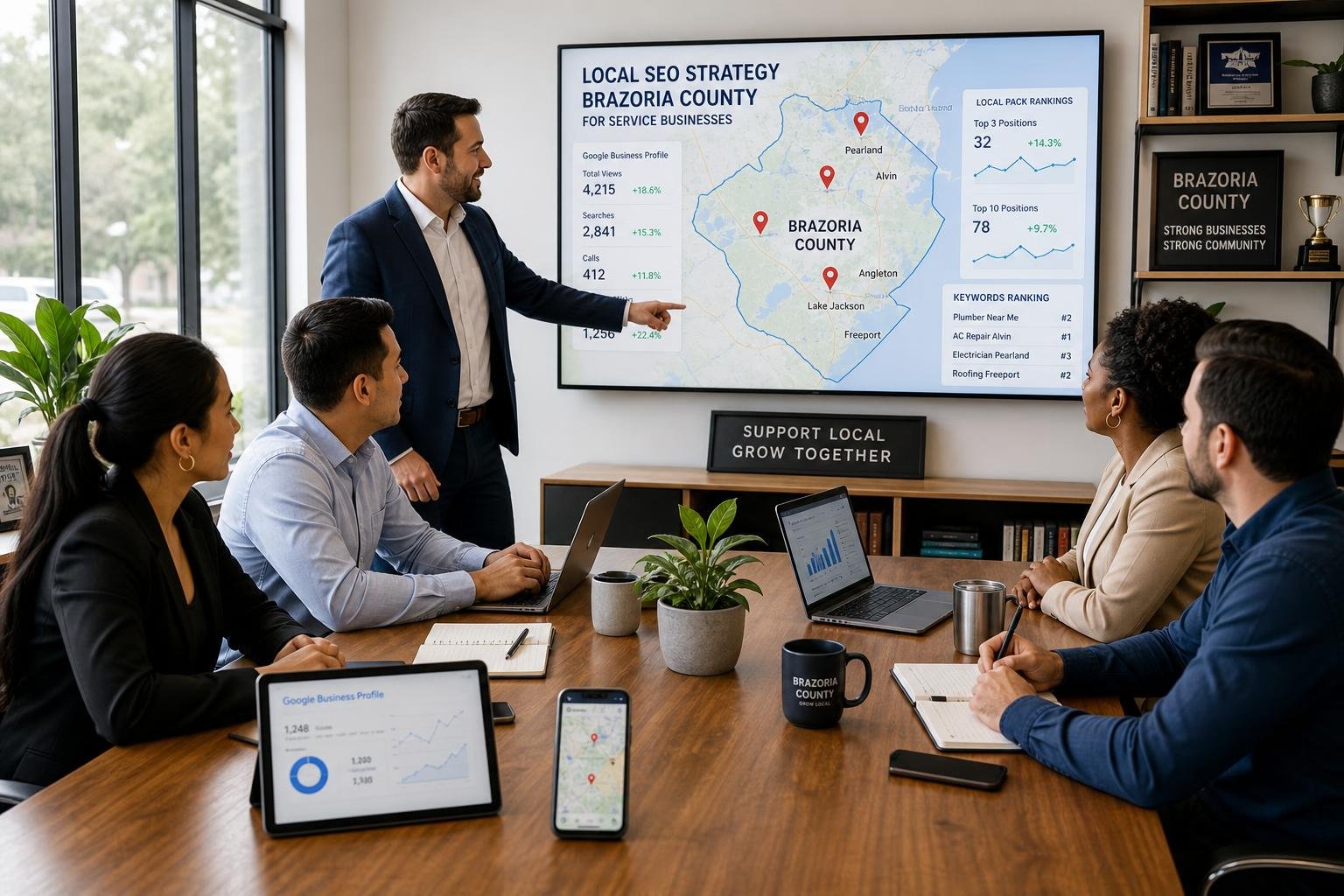
Geo-grid analysis, drive-time mapping, and rank tracking make the work more practical. That kind of reporting is way more useful than vague “SEO progress” updates that don’t connect to actual calls or bookings.
Using Geo-Grid and Drive-Time Analysis to Define Winnable Areas
Your trade area isn’t always the same as city limits. Geo-grid tools and drive-time mapping show where you can realistically win visibility.
This is especially true in a county like Brazoria, where service ranges often overlap. Focus on winnable areas first, then expand as the data supports it.
Reverse Engineering Local Competitors in the Map Pack
Competitor analysis should dig into who’s holding map pack visibility and why. Look at their categories, review volume, links, photos, service pages, and location strength.
Reverse engineering local competitors can show what’s missing from your own setup. Sometimes, a focused local SEO strategy can beat a bigger brand that’s slacking on the details.
Tracking Rankings, Calls, Clicks, and Conversion Trends
Rank tracking has to cover local pack rankings and map pack visibility. Don’t forget website clicks and calls, either.
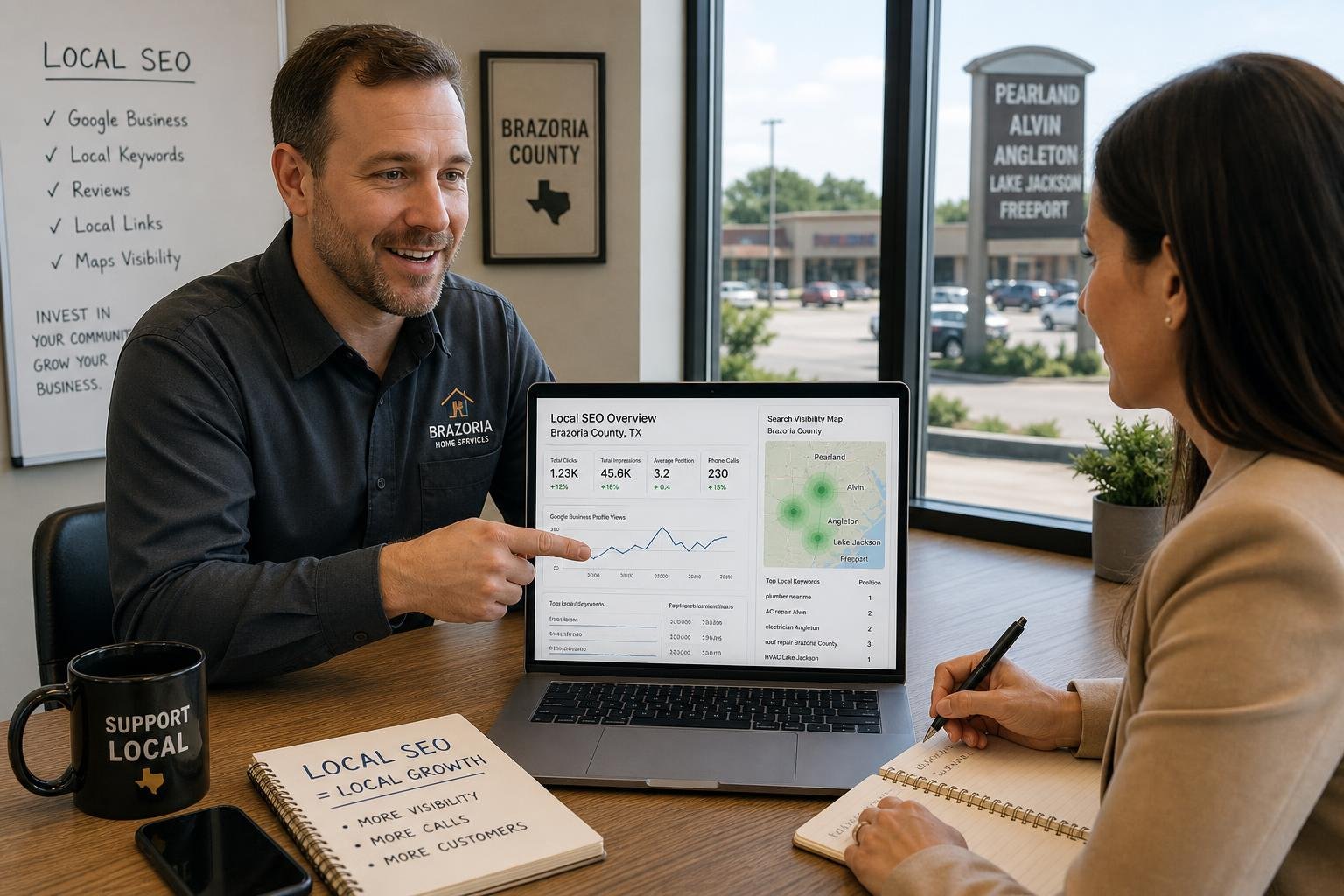
Check Google Business Profile Insights, but also keep an eye on website traffic and direction requests. It’s easy to miss trends if you only look at one or two data points.
Tools like Semrush and Ahrefs help with keyword and backlink analysis. Still, they can never really replace the value of actual lead data.
At the end of the day, the real question is simple: Is the business getting more qualified inquiries? That’s the metric that matters most.
What Transparent Reporting Should Look Like From a Provider
Good reporting shows what changed and where it happened. It should also make it clear what those changes mean for revenue.
Vanity metrics can be distracting, so a solid report separates those from real outcomes. That’s why businesses tend to appreciate transparent dashboards from providers like SEO My Website Guru.
A 30-Day Results Guarantee brings a bit of accountability. When a provider is willing to stand behind early progress, it says something.
Frequently Asked Questions
What are the most effective local SEO ranking factors for service-area businesses in 2026?
The strongest factors? Google Business Profile quality, review strength, NAP consistency, service-page relevance, and local links. For service-area businesses, it really helps to have clean service-area settings and proof of real market coverage.
How can a service business optimize its Google Business Profile to generate more local leads?
A complete profile uses the right primary category and useful secondary categories. Add a clear business description, accurate service areas, and real photos.
Regular posts and fresh reviews make a difference. Responding quickly to reviews builds trust and engagement, too.
How do you choose the right primary and secondary categories for a local listing to improve visibility?
The primary category should match the main service that drives the most business. Secondary categories should support related services, not compete with the main one.
What is the best way to build consistent citations across directories without creating duplicate listings?
Start with the core platforms first. Audit your existing listings before adding new ones anywhere else.
Keep the name, address, and phone number identical across every directory. That’s how search engines connect the dots.
How can a service business earn more high-quality local reviews and respond to them to support rankings?
The best time to ask for a review? Right after a successful job, when the customer’s happiest.
Respond fast, keep it polite, and mention specifics. It helps with rankings and builds buyer trust—honestly, it’s just good business.
What should a local keyword and content strategy look like for targeting multiple towns and neighborhoods in one county?
You'll want to build out unique service pages, focus on local intent, and actually cover the geography you claim. Instead of just copying the same page for every town, try creating content that really speaks to each area's needs and quirks.
Think about what people in each spot actually want, and show real proof that you know the neighborhood. It's not just about keywords—it's about making sure each page feels genuinely local.