

Digital marketing vs local SEO in Brazoria County

Frank Jones • May 1, 2026

Share this article

Digital marketing vs local SEO in Brazoria County

White statue on a brick pedestal in a grassy park under a blue sky, with a curving paved path leading to it

Digital Marketing vs Local SEO in Brazoria County

Small business owners in Brazoria County face a real question when planning their marketing: should they focus on broad digital marketing, local SEO, or try both? The answer depends on how customers search, where they’re located, and what kind of return you need for each dollar spent.

For plumbers, HVAC contractors, dentists, and other service businesses that count on local calls and booked jobs, the difference between digital marketing and local SEO in Brazoria County isn’t just theory. It shapes where leads come from and how quickly your phone starts ringing.

Two business professionals discussing digital marketing and local SEO strategies with a digital screen and a map of Brazoria County in a modern office.

For most location-based businesses in towns like Angleton, Lake Jackson, Pearland, and Alvin, local SEO brings in customers faster than anything else because it targets folks already searching for a specific service nearby. Broad digital marketing still matters, but it works best as a layer on top of a strong local search presence, not as a replacement.

This guide breaks down what each approach actually covers, how Google Maps acts as a practical storefront in 2026, and how to decide where to put your time and budget based on real competition and ROI expectations. If you want hands-on local SEO help in Brazoria County, you can call SEO My Website Guru at (979) 487-3296 or check out seomywebsite.guru to see what kind of improvement you might get in the first month.

Key Takeaways

  • Local SEO targets high-intent, nearby searchers ready to call or book, making it the strongest lead source for service businesses in Brazoria County.
  • Google Maps and the Map Pack work like a digital storefront for plumbers and contractors, often driving more calls than a standard website.
  • Broader digital marketing adds value when built on top of solid local search, not as a substitute for it.

What Each Approach Actually Covers

A group of marketing professionals discussing charts and maps related to digital marketing and local SEO in a bright office.

Digital marketing and local SEO are related, but they aren’t the same thing. Digital marketing covers dozens of online channels, while local SEO focuses on showing up when local customers search for a specific service.

What Falls Under Digital Marketing

Digital marketing includes all the online channels a business might use to reach its audience. Think paid search ads, social media, email campaigns, display ads, content marketing, videos, and more.

As Digital Vidya points out, SEO itself is just one part of the bigger digital marketing picture. For a plumbing company in Brazoria County, digital marketing might mean running Google Ads for emergency repairs, sharing before-and-after photos on Facebook, or sending out seasonal maintenance emails.

The main goal? Build a digital presence, drive website traffic, and create touchpoints across different platforms.

What Local SEO Focuses On

Local SEO is a specialized branch of search engine optimization. It’s all about getting found in location-based search results —especially Google Maps, the Map Pack, and organic results that pop up when someone searches with local intent, like "plumber near me" or "emergency plumber Angleton."

Core local SEO work includes:

  • Google Business Profile optimization
  • Local citation building and NAP consistency
  • Online review management
  • Service area page creation
  • Local keyword targeting
  • Geo-grid tracking and competitor analysis

The whole point is to connect a business with local customers ready to take action.

Where the Two Overlap for Small Businesses

Every local SEO effort falls under the digital marketing umbrella, but not every digital marketing move is local SEO. Content creation, on-page tweaks, and website improvements help both sides.

A service business gets the most out of its efforts when local SEO forms the core, and broader digital marketing fills in the gaps—like retargeting past visitors or building brand awareness beyond search.

Why Google Maps Matters More Than Broad Reach

A diverse team of marketing professionals collaborating around a desk with devices showing maps and local business listings focused on Brazoria County.

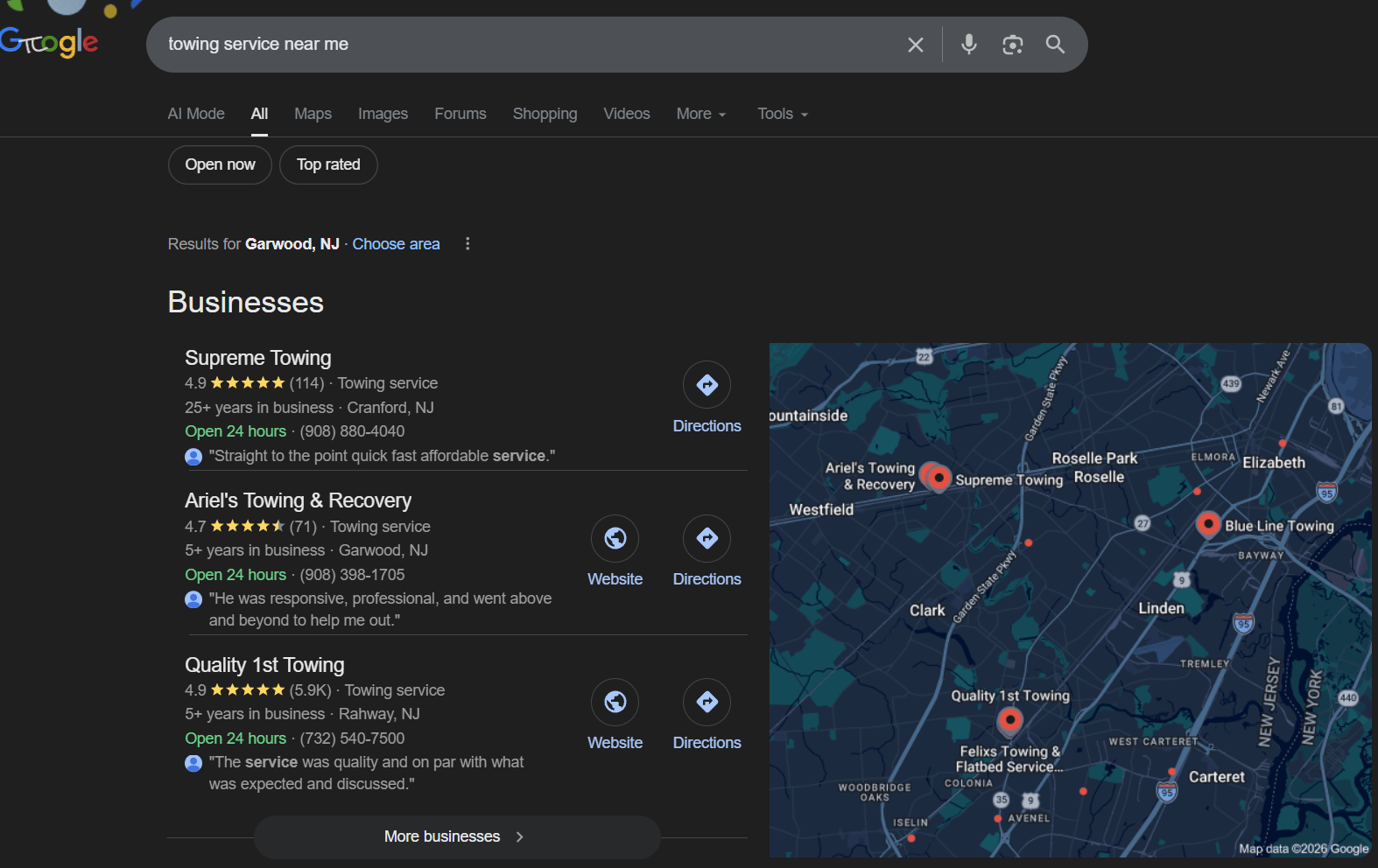
For service businesses in Brazoria County, Google Maps isn’t just a nice bonus. It’s the main way local customers find, compare, and contact providers. The Map Pack shows up above regular search results and grabs most of the clicks for high-intent local searches.

How Google Business Profile Influences Calls and Leads

A complete and optimized Google Business Profile is the single most valuable asset for local lead generation. It controls what shows up in Google Maps—business name, phone number, reviews, hours, photos, and service categories.

EvenDigit points out that businesses with active, complete profiles get a lot more calls, direction requests, and website clicks than those with bare-bones listings. For a plumber in Angleton or Lake Jackson, the Google Business Profile is often the first (and only) thing a customer checks before calling.

Why the Map Pack Drives High-Intent Searches

When someone types "water heater repair Pearland" into Google, the Map Pack pops up at the top with three local results. These searches have strong intent—the person isn’t just researching plumbing, they need help right now.

MapLabs notes that Google Maps marketing often brings a better return than traditional SEO for businesses that depend on local calls, since it grabs customers right when they’re ready to decide.

Ranking in the Map Pack depends on relevance, proximity, and prominence. Businesses that do well on all three get more calls and booked jobs than their competitors.

How Nearby Searches Behave in Brazoria County

Brazoria County covers a big area with towns like Angleton, Lake Jackson, Pearland, Alvin, and plenty of smaller communities. Search behavior here is more like a network of towns than a single big city. A customer in Alvin wants results near Alvin, not 40 minutes away.

This spread makes local SEO even more important. Businesses need to optimize for several service areas, and tools like geo-grid tracking show exactly where a business appears on the map and where it drops off.

Drive-time mapping, which companies like SEO My Website Guru use, helps define the real radius a business can serve and focuses optimization on the zones that matter most.

How Local SEO Works in Practice in 2026

Local SEO in 2026 is more data-driven—and, honestly, more competitive—than it was even a couple years ago. Winning in local search means covering keyword research, on-page structure, citations, reviews, and ongoing tracking. Each piece supports the others.

Local Keyword Research by Service and City

Good local keyword research starts by mapping every service a business offers against each city or town it serves. A plumbing company in Brazoria County might go after terms like "drain cleaning Lake Jackson," "slab leak repair Angleton," or "tankless water heater installation Alvin."

The goal? Find the exact phrases local customers are typing into Google. Tools like Google Search Console and competitor analysis show which terms actually drive traffic. Backlinko says building content around these specific service-plus-location combos is still one of the best ways to rank locally in 2026.

On-Page Optimization for Service Area Pages

Each main service and location combo deserves its own page with unique, useful content. A solid service area page uses a clear H1, relevant local keywords in headings and body, schema markup for business info, and strong calls to action.

These pages should answer the searcher’s actual question: What do you do, where do you do it, and how can I reach you? Emfluence points out that local businesses who align website content with their Google Business Profile categories and services see stronger rankings both in Maps and organic results.

Citations, Yelp, and NAP Consistency

Local citations are listings of your business’s name, address, and phone number (NAP) across sites like Yelp, the BBB, Angi, and industry directories. Consistent NAP details tell search engines your business is legit and established.

Conflicting or outdated citations can hurt rankings. Cleaning up old listings and building new ones on relevant directories is just standard practice now. SocialFirm says citations and listings are still key trust signals that reinforce your presence in Google Maps and local search.

Online Reviews and Reputation Signals

Online reviews are one of the strongest ranking factors for the Map Pack—and they directly affect whether a customer calls you or the next business. A plumbing company with 80 reviews and a 4.8-star average in Pearland will almost always beat a competitor with 12 reviews and a 4.0 average.

Getting reviews regularly and responding to them quickly shows Google you’re active and trusted. Review velocity, recency, and even the keywords inside reviews can all impact local rankings.

Competitor Analysis, Geo-Grid Tracking, and Drive-Time Mapping

Advanced local SEO digs deeper. Competitor reverse engineering reveals what top-ranking businesses are doing differently—review volume, citation profiles, website content, you name it.

Geo-grid tracking plots your Map Pack position across a grid of GPS points in your service area, showing blind spots that a simple rank check would miss. Drive-time mapping defines the real area a customer considers "local" based on travel time, not just zip codes. With these tools, companies like SEO My Website Guru can focus optimization where you have the best shot at winning customers.

When Broader Digital Marketing Makes Sense

Local SEO should be the bedrock for any location-based business. Still, there are times when broader digital marketing channels bring real value. The trick is knowing when to branch out without losing sight of the channels that drive the most leads.

Branding and Demand Beyond Map Visibility

Some businesses want to build name recognition before a customer even searches for a service. Social media, display ads, and community sponsorships can create awareness that pays off later, when someone actually needs a plumber or contractor.

Branding works best after you’ve already nailed your local search presence and want to grow further. Without that foundation, branding spend often leads to impressions but not conversions.

Content Creation for Education and Trust

Blog posts, how-to guides, and videos help show expertise and build trust with your audience. If a plumbing company publishes a guide on "signs you need a slab leak inspection," it answers a real question and creates content that can rank in organic search.

Content marketing supports local SEO when it targets local keywords and links back to your service pages. Paradox Media notes that businesses who make location-relevant educational content see better organic traffic and stronger authority in their field.

Landing Pages, Retargeting, and Lead Conversion

Landing pages focused on conversion capture leads from paid ads, emails, or social clicks. Retargeting keeps your business in front of visitors who didn’t call or book on their first visit.

These tools extend your digital marketing reach, but they work best when your website is built for conversions—fast load times, clear calls to action, mobile-first design, and a clean structure all help turn visitors into customers.

Choosing the Right Investment for Your Business

Finding the right balance between local SEO and broader digital marketing depends on your business type, budget, team, and how tough your local competition is. There’s no magic formula, but some clear trends show up for service businesses.

Best Fit for Home Service and Plumbing Companies

Plumbers, electricians, HVAC techs—all those home service pros in Brazoria County—rely almost totally on local customers. Their best prospects? Folks within a 20- to 30-minute drive who need help today or maybe later this week.

For these businesses, local SEO usually gives the best bang for your buck. It targets people exactly when they’re searching for your help. Broader digital marketing makes sense, but only after you’ve nailed down your local search.

DIY vs Hiring a Local SEO Agency

Some owners try the DIY route. They claim their Google Business Profile, ask for reviews, maybe write a few blogs. That can work a little, but results flatline fast—especially if other businesses are putting in more effort. According to this comparison of DIY and pro SEO , the gap just gets wider as competitors step up their game.

Hiring a local SEO agency starts to make sense if you don’t have the time, tools, or know-how to keep optimizing. When you’re shopping for an agency, look at a few things:

  • Transparency: Do they actually show you what’s happening with clear reports?
  • Local expertise: Do they get the quirks of Brazoria County?
  • Accountability: Are there real benchmarks, like a results guarantee?

Some agencies, like SEO My Website Guru, offer a 30-Day Results Guarantee tied to measurable improvements. That’s a pretty low-risk way to try professional local SEO if you’ve never done it before.

How to Evaluate ROI, Reporting, and Time Commitment

If you want to track ROI from local SEO, focus on a few key metrics: Google Business Profile actions (calls, directions, clicks), keyword rankings, Google Search Console impressions, and actual leads. These numbers tell you way more than vague promises about “more traffic.”

Good SEO providers give you regular reports you can actually read, connecting their work to real outcomes. If you can’t see what changed and what you got from it, it’s tough to justify the spend. Time matters too. Local SEO isn’t a set-it-and-forget-it thing. It needs steady work over months, which is why a lot of owners just hand it off.

What a Balanced Growth Plan Looks Like

Most small businesses do best by making local SEO their foundation and then layering on targeted digital marketing. The order matters here. You want to start with what brings the fastest, most measurable results.

Start With Local Search Foundations

First things first—get found in Google Maps and local search. That means:

  • Optimizing your Google Business Profile
  • Building accurate local citations
  • Getting and replying to online reviews
  • Creating service area pages for your main services and cities
  • Setting up Google Search Console and analytics

These steps lay the groundwork. Without them, paid ads and social campaigns just send people to a business Google barely trusts—or barely shows in local results.

Add Website Improvements That Increase Conversion

Once you’re showing up locally, your website has to turn visitors into leads. You need fast load times, a mobile-friendly design, strong calls to action on every page, and a layout that’s easy for both people and search engines to follow.

Features like schema markup, solid internal linking, and conversion-focused design turn your site from a digital flyer into a real lead machine. If you treat web design and SEO as one project (like SEO My Website Guru does), you’ll probably see faster gains in both rankings and leads.

Layer in Broader Channels Without Losing Local Focus

After you’ve nailed local SEO and your website, then you can branch out to content marketing, social media, email, or paid ads. The trick is to use these channels to boost your local strategy—not distract from it.

Let’s say you write a blog post like “how to prevent frozen pipes in Pearland.” That post can show up in search, get shared on social, and link back to your pipe repair service page. Everything you do should reinforce your local presence, because that’s where the best leads come from.

Frequently Asked Questions

How do I decide whether to invest more in digital marketing or local SEO for my business?

If you count on customers in a specific area, local SEO should be your first move. Broader digital marketing adds the most value after you’re already visible locally. It really comes down to where your customers are and how they find you.

What business goals are best served by local SEO compared to broader digital marketing campaigns?

Local SEO works best for getting inbound calls, directions, and appointments from nearby people. Broader digital marketing is better for building your brand, educating your audience, or reaching folks who aren’t actively searching yet.

How is SEO evolving in 2026, and what changes matter most for local search visibility?

By 2026, local SEO leans hard on Google Business Profile completeness, review quality and speed, and content that matches what people actually want. As Media Search Group points out , AI-driven search features like AI Overviews now use local business data, so GBP optimization is more important than ever.

Is local SEO a separate strategy from digital marketing, or part of the same plan?

Local SEO is a specialty inside digital marketing. It has its own tactics, but it works best when it’s in sync with your bigger digital plan. They’re not rivals—one helps the other.

What are the main types of SEO, and which ones impact local customers the most?

The main types are local SEO, national (or traditional) SEO, and technical SEO. If you serve a specific area like Brazoria County, local SEO has the biggest direct impact because it targets people who are searching with a location in mind and ready to act.

How can I measure ROI and track leads from local SEO versus paid digital advertising?

Tracking ROI for local SEO usually means checking Google Business Profile insights—think calls, clicks, or direction requests. You can also pull info from Google Search Console, like impressions and click-through rates.

For leads, some folks use call tracking numbers or keep an eye on form submissions. Paid ads work differently; you'll want to look at the ad platform dashboards for stats like cost per click, cost per lead, and conversion rates.

If you're trying to figure out which channel gives you more bang for your buck, just compare the number of leads each one brings in for every dollar you spend. It’s not always straightforward, but that’s the gist.

Recent Posts

Nighttime industrial refinery glowing with lights under a dark blue sky
By Frank Jones May 1, 2026
Lake Jackson businesses are leaving thousands of dollars in local search visibility on the table. Here's what's working for local SEO in the Lake Jackson market right now — and how to get there fast.
Hand holding a small chalkboard sign reading “BUY LOCAL” against a red background
By Frank Jones May 1, 2026
With AI search and Google's constant updates, many business owners wonder if local SEO still works. Here's the evidence-based answer — and what's changed for Brazoria County businesses.
Laptop displaying a dashboard on a desk, with a bright blue blurred foreground and soft window light.
By Frank Jones May 1, 2026
Claiming your GBP is just the start. Here's exactly what to do after you claim your Google Business Profile to start showing up in local search and on Google Maps.
Vintage storefront with red-and-white awning, café chairs, chalkboard sign, and stacked suitcases on the sidewalk
By Frank Jones May 1, 2026
More customers find local businesses on Google Maps than on any website. Here's why your Google Business Profile is now more important than your homepage — and what to do about it.
Google storefront with colorful logo, map pins, and search icons suggesting local business search.
By Frank Jones May 1, 2026
Local SEO explained in plain English — what it is, what it actually involves, and whether doing it yourself makes sense for your business. No jargon, no upsell.
Plumber tightening a brass pipe fitting under a sink with a wrench, surrounded by reflective insulation.
By Frank Jones May 1, 2026
Plumbers who rank on Google Maps get the call before anyone else does. Here are 10 reasons Brazoria County plumbers are using local SEO to fill their schedule — without paying for ads.
White letter blocks spelling “Google” on a light background
By Frank Jones May 1, 2026
A step-by-step local SEO strategy built for service businesses in Lake Jackson, Freeport, and Brazoria County. Stop guessing what works — here's the exact playbook we use for clients.
White pickup truck on a tow truck ramp while a worker kneels beside it on a roadside.
By Frank Jones May 1, 2026
When someone's stranded, they search Google Maps first. Here's how towing companies in Texas win those emergency calls with local SEO — and why most tow operators are leaving money on the table.
Map of towing and recovery service locations marked by many green pins in a coastal area.
By Frank Jones May 1, 2026
If your customers are local, your SEO should be too. Here's an honest breakdown of whether local SEO is worth it for Brazoria County businesses — and what happens if you skip it.
White letter tiles spelling SEO on a wooden table.
By Frank Jones May 1, 2026
Still managing your Google Maps listing yourself? Here are 10 reasons why hiring a Google Maps SEO specialist gets you into the map pack faster — and keeps you there.