


Local SEO in Brazoria County: When It Is Worth It
For most small businesses in Brazoria County, the real question isn’t whether local SEO matters. It’s whether the investment makes sense right now, considering how customers actually find and choose local providers.
The answer really comes down to how much a business depends on nearby folks searching Google and Google Maps for services. A dental office in Lake Jackson, a plumber in Pearland, a restaurant in Angleton—each of these relies on local customers finding them at the moment of need.
If you depend on calls, bookings, or foot traffic from people within a reasonable drive, local SEO isn’t optional. It’s the most direct path to steady, high-quality leads.

The real decision isn’t “do I need it?” but “when is it worth paying for help versus doing it myself?” That depends on your competition, your online visibility, and how much revenue you’re risking.
This article breaks down signals that tell you it’s time to act, what a serious local SEO campaign should actually include, and how to judge if it’s working. For Brazoria County businesses ready to try professional support, providers like SEO My Website Guru offer a practical starting point, focusing on measurable results and a 30-Day Results Guarantee.
Key Takeaways
- Local SEO connects your business with nearby customers most likely to call, book, or visit.
- A real campaign goes way beyond just setting up a profile. It should include trade-area analysis, website optimization, reputation management, and honest reporting.
- Don’t invest based on promises about rankings alone. Look for measurable ROI.
How Local Search Impacts Calls, Leads, and Bookings
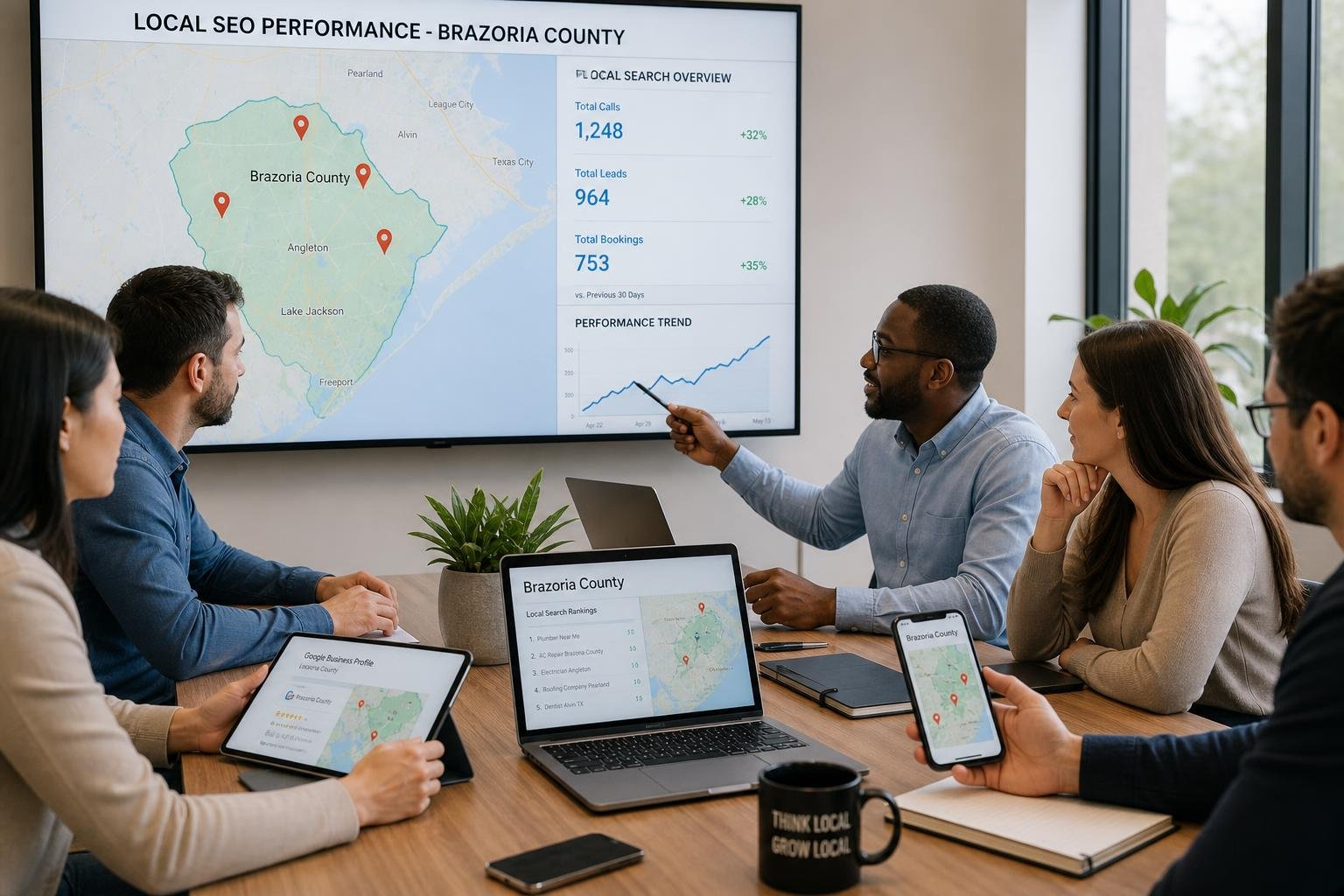
Local search is where purchase intent meets proximity. When someone types “AC repair near me” or “best dentist in Brazoria County,” they’re not just browsing—they’re ready to act.
The businesses that show up in that moment get the call, the booking, or the visit. If you’re not there, you lose that chance. There’s no second shot.
Why Google Maps Visibility Often Matters More Than General Traffic
The Google Map Pack—the three-business listing at the top of most local searches—grabs a huge share of clicks and calls. Local SEO statistics from Digital Silk show that local searches lead to a purchase or contact way more often than general organic results.
For a service business in Brazoria County, showing up in the Map Pack for relevant searches is often worth more than ranking on page one for broad, non-local terms. Website traffic from outside your service area doesn’t help. A roofing company doesn’t need visitors from Dallas—it needs homeowners within 20 or 30 miles who need help now.
How Local Searchers Turn Into Higher-Intent Leads
Local searchers are further along in the buying process. They already know what they need and want someone nearby to help.
Research from Loopex Digital says 88% of smartphone users who do a local search visit or call a business within 24 hours. That’s a huge deal.
Local SEO isn’t like general digital marketing. The audience isn’t just a demographic—it’s a real person, phone in hand, looking for a specific service, right here.
What Small Businesses Lose When They Are Hard to Find Nearby
If you’re invisible in local search, those high-intent leads go straight to competitors. You’ll never know someone searched, couldn’t find you, and called someone else.
The cost is real. Missed calls, lost appointments, and revenue end up with a competitor who just had a stronger digital presence. That gap adds up over time.
Signs Your Business Probably Needs Professional Help
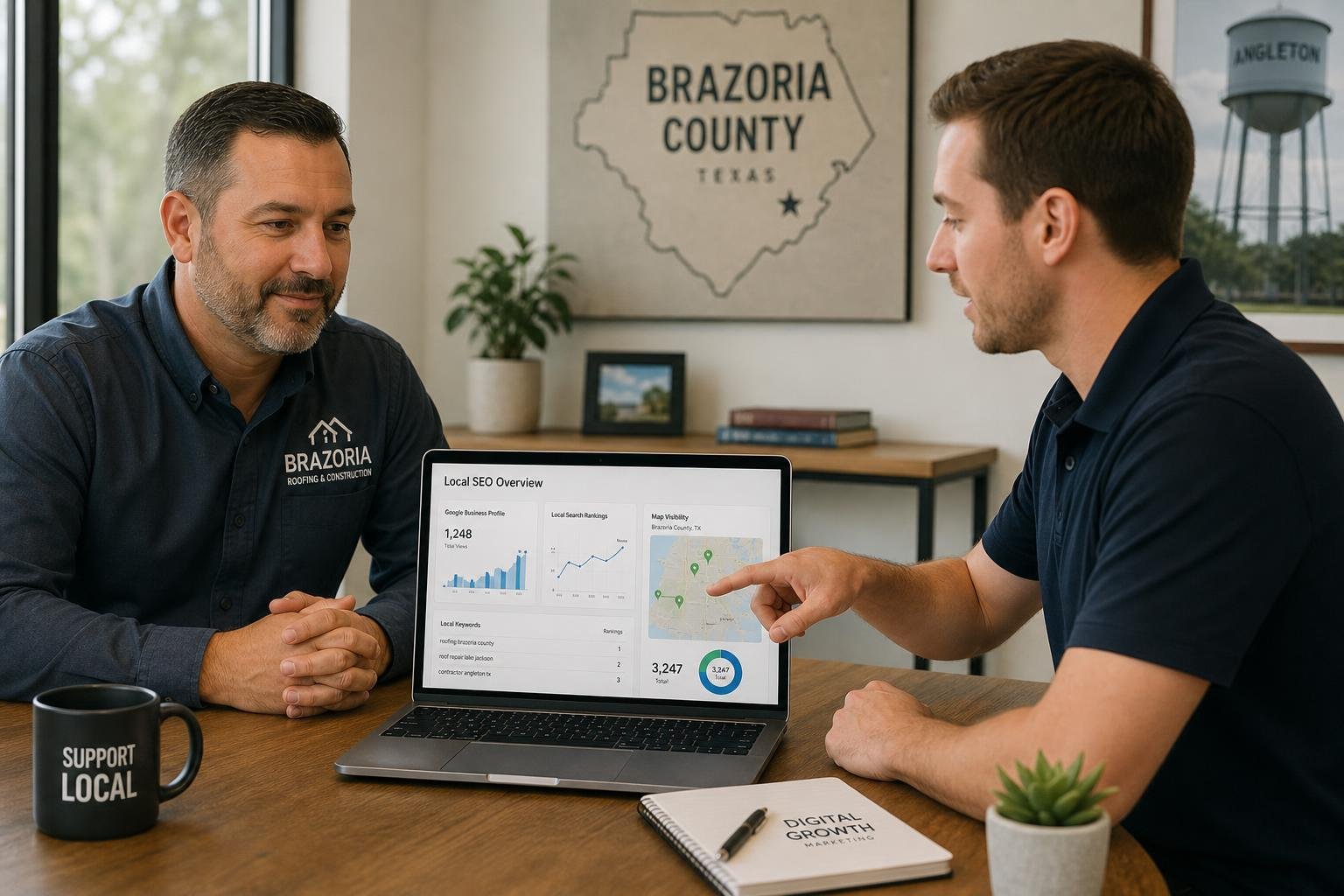
Some patterns make it pretty clear you’d benefit from working with an SEO pro instead of managing local search on your own. These signs usually show up as gaps in visibility, weak profiles, poor conversions, or getting outpaced by competitors.
You Rely on Nearby Customers but Are Not in the Map Pack
If you serve a local area but don’t show up in the top three Google Maps results for your main services, you’re losing leads every single day. Local Falcon points out that not appearing in the Map Pack is a big red flag, especially in competitive niches like home services, medical, or legal.
Your Google Business Profile Is Incomplete, Inconsistent, or Underperforming
If your Google Business Profile has missing categories, old hours, no photos, or inconsistent info, Google’s algorithm sees weak signals. Customers see a weak first impression.
Optimizing your Google Business Profile is one of the highest-impact steps in local SEO. An incomplete profile is a common, fixable problem—but a lot of businesses just don’t get around to it.
You Have Traffic but Weak Conversion Performance
Maybe your website gets visitors, but nobody calls or fills out forms. That usually means website optimization issues—slow load times, confusing navigation, missing calls to action, or pages that don’t match what people searched for.
Search Optimize Me says traffic without conversions is a clear sign you need professional help with your website and SEO strategy.
Competitors Keep Outranking You Across Service Areas
If competitors always show up above you in Maps and local results, they’ve probably got a stronger local SEO game. Competitor analysis can show what they’re doing differently—maybe they have more reviews, better citations, stronger website SEO, or more local content.
Without that analysis, you’re just guessing why you’re not ranking as well.
What a Serious Local SEO Campaign Should Actually Include
A real local SEO campaign is more than claiming your Google Business Profile and tossing a few keywords on your homepage. It takes coordinated work—profile optimization, local keyword targeting, website fixes, reputation management, and regular content, all tied to a clear strategy and real benchmarks.
Google Business Profile Optimization and Local Trust Signals
Your Google Business Profile is the foundation. A solid campaign means complete and correct business info, right category selection, regular photo and post updates, Q\&A management, and consistent NAP (name, address, phone) data across all listings.
Local trust signals—like consistent directory listings and quality backlinks from local sources—back up your profile’s authority. Providers like SEO My Website Guru often use AI-supported updates and weekly reviews of ranking factors to keep profiles competitive.
Trade Area Mapping, Geo-Grid Tracking, and Local Keyword Targeting
Generic keyword research just isn’t enough. You need to know where you rank across your whole trade area, not just in one zip code.
Geo-grid tracking tools show your rankings at multiple points on a map, revealing blind spots and chances to improve. Trade area mapping with drive-time analysis helps you focus on the zones where customers are most likely to convert.
Local keyword targeting then lines up your content and optimization with the exact terms people in those spots are searching for.
On-Page Optimization, Website SEO, and Conversion-Focused Landing Pages
Your website has to support your local strategy. That means:
- Title tags and meta descriptions aimed at local service terms
- Landing pages for every service and location combo
- Schema markup so search engines “get” your business
- Fast load times and mobile-friendly design
- Clear calls to action everywhere
LocaliQ’s local SEO checklist says on-page optimization is one of the most controllable factors for local rankings.
Reputation Management, Content, and Authority Building
Reviews matter—a lot. A reputation management plan should include a way to get new reviews, respond to existing ones, and keep an eye on sentiment over time.
Content creation—blog posts, service pages, local resources—builds authority and gives search engines more context about what you do and where. Link building from local and industry-relevant sources adds another layer of credibility.
Why Website Quality and Maps Rankings Need to Work Together
A strong Google Maps presence and a high-performing website go hand in hand. They boost each other. If you rank well in Maps but your website is slow or confusing, you’ll lose leads. If you have a great website but nobody finds it in local search, it just sits there.
How Website Design Supports Trust and Conversion
When someone clicks through from Maps or a local search, your site has just a few seconds to earn trust. Clean design, clear service descriptions, visible contact info, and professional visuals all matter.
Customer engagement starts the second the page loads. If the site feels sketchy or confusing, people bounce.
Where Web Development Affects Speed, Mobile UX, and SEO
Your web development choices directly impact search rankings. Google uses page speed and mobile usability as ranking factors. Most local searchers are on their phones—if your site loads slowly or looks bad on mobile, they’ll bail.
Clean code, optimized images, and responsive layouts aren’t extras. They’re must-haves for competitive website optimization.
Why Ranking Improvements Mean Less Without a Strong Next Step
Climbing the rankings only matters if your digital presence turns that visibility into real business. You can hit the top of the Map Pack and still underperform if your website doesn’t guide visitors to a clear next step—calling, booking, filling out a form, or dropping by.
Every ranking gain should come with conversion-focused design and content.
How to Evaluate a Provider Before You Hire One
Choosing a local SEO agency or consultant is a business decision—don’t take it lightly. The right provider will be up front about their process, realistic about timelines, and focused on results that actually matter to you.
What to Ask About Reporting, Benchmarks, and the Client Dashboard
Before you sign anything, ask how progress will be measured and reported. Splinternet Marketing recommends expecting clear baseline benchmarks, regular reporting on agreed metrics, and access to a client dashboard so you can see your data.
If a provider can’t explain what they’ll track and how, that’s a red flag.
Key questions:
- What metrics will you report on monthly?
- Will I get access to a live dashboard?
- How do you define and measure success in the first 90 days?
How to Judge Strategy Depth Beyond Generic SEO Packages
Many agencies offer cookie-cutter packages that may not fit your business. A good provider should do competitor analysis, review your current digital presence, and suggest a plan tailored to your service area and goals.
Forbes recommends defining your needs before evaluating agencies and looking for providers who ask detailed questions about your business before offering solutions.
If someone promises “we’ll get you to page one” without specifics—about which keywords, which locations, or what timeline—be skeptical.
When a Local SEO Agency Makes More Sense Than a Broad Digital Marketing Agency
Broad digital marketing agencies usually offer SEO as just one of their many services. But local SEO? That’s a whole different ballgame, and it takes a different toolkit.
Things like local citation management, geo-grid analysis, and Google Business Profile strategy aren’t skills every agency has. If you’re a small business in Brazoria County, you’ll probably get better, faster results from someone who really knows the local scene than from a big generalist agency.
When Local SEO Is Enough and When Broader Marketing Helps
Not every business needs the same marketing plan. Your mix depends on your audience, where you serve, and how your business works.
Businesses That Should Prioritize Local SEO First
If your customers come from a specific area, local SEO should almost always be your first move. This means:
- Home service providers (plumbers, electricians, HVAC, roofers)
- Medical and dental practices
- Legal offices
- Restaurants and retail stores
- Auto repair shops and salons
For these businesses, local search marketing is the shortest path to new revenue. BrightLocal puts it plainly: local SEO connects you with people who are already looking for what you offer, right in your neighborhood.
When National SEO Becomes Relevant
If you sell products or services outside your local area—like an ecommerce shop, a consulting agency, or a SaaS company—national SEO starts to matter. Some businesses really do need both.
For example, a law firm might want to rank locally for its office but also go after national keywords for a specialty. Most of the time, though, it’s smart to lock down your local presence before chasing a bigger audience.
How Social Media Marketing Supports but Does Not Replace Search Visibility
Social media can help you build your brand and connect with your community, but it works differently than search. People on social platforms are browsing, not hunting for a service.
Social campaigns can boost your reputation and send some referral traffic, but they’re not a replacement for search visibility. If you focus only on social and skip local SEO, you’ll miss the folks who are ready to buy right now.
Making the Decision Based on ROI Rather Than Hype
Don’t let hype drive your decisions. Your investment in local SEO should pay off in real numbers—calls, leads, and revenue that outweigh what you spend.
Metrics That Matter More Than Vanity Rankings
Ranking high for a keyword feels nice, but it only matters if it brings you business. The metrics that actually move the needle include:
| Metric | Why It Matters |
|---|---|
| Google Business Profile actions (calls, direction requests, website clicks) | Direct measures of customer engagement |
| Phone calls and form submissions from local search | Ties visibility to actual leads |
| Conversion rate on landing pages | Shows whether traffic turns into business |
| Revenue attributed to organic local traffic | The bottom line |
Raw traffic numbers and keyword counts can be misleading without the right context. Ahrefs’ SEO ROI framework suggests you should connect the value of your organic conversions directly to your SEO investment.
What Reasonable Early Progress Looks Like
Local SEO doesn’t work overnight. Most businesses see real movement in 3 to 6 months, depending on how tough the competition is and where you’re starting from. Early signs you’re on the right track might include:
- More impressions and clicks in Google Search Console
- Better geo-grid ranking coverage across your area
- Growth in Google Business Profile views and actions
- Extra calls and inquiries from new customers
Some providers, like SEO My Website Guru, even offer guarantees tied to early progress—think 30-Day Results Guarantees—to keep everyone accountable.
How to Decide Whether DIY, In-House, or an Outside Specialist Fits Best
If you run a small business with a tight budget and don’t have much competition, you might be able to handle local SEO yourself. You can claim and optimize your Google Business Profile, ask for reviews, and make sure your website info is accurate—those are all doable.
But if you’re in a crowded market, serve more than one location, or just don’t have time for ongoing SEO, hiring an expert or agency probably makes more sense. Weigh the cost against the value of the leads you get. If just one new client a month pays for the investment, it’s probably worth it.
Frequently Asked Questions
How does local SEO differ from traditional SEO for a business website?
Traditional SEO chases broad keywords across big areas or even nationally. Local SEO narrows the focus to a specific zone, with a big emphasis on Google Maps, your Google Business Profile, and location-specific searches.
While there’s some overlap—like on-page optimization—local SEO adds things like citation management, reviews, and geo-targeted content.
What specific benefits can local SEO provide for businesses that serve nearby customers?
Local SEO puts your business right in front of people who are searching for your services nearby. You’ll get more calls and direction requests, higher-quality leads from people close by, better trust thanks to reviews and consistent info, and a stronger competitive spot in your local market.
Which types of businesses gain the most from appearing in map results and local listings?
Businesses that rely on foot traffic, phone calls, or service-area visits benefit the most—think restaurants, medical practices, home service companies, auto shops, law firms, and retailers. If your customers need to be physically close, you’re a prime candidate for local SEO.
How important is a Google Business Profile for showing up in local search results?
You can’t skip a Google Business Profile. It’s the main data source Google uses for the Map Pack and local results. Without a complete, verified, and optimized profile, your chances of showing up in the local three-pack that dominates most local search results are basically zero.
What factors most influence ranking in the local map pack and localized organic results?
A 2026 analysis from ALM Corp points to a few big factors: your Google Business Profile’s completeness and activity, how many and how good your reviews are, NAP consistency across citations, how close you are to the searcher, your website’s relevance and authority, and behavioral signals like click-throughs and engagement. It’s not just one thing—it’s the mix that gets you ranked.
How can a business measure whether local SEO efforts are generating leads and revenue?
Start by tracking Google Business Profile actions like calls, direction requests, and website clicks. Keep an eye on phone call volume and form submissions from your local landing pages.
Compare revenue trends with what you’re spending on SEO. Tools like Google Search Console and call tracking software help you see what’s working.
You can even use a clear ROI formula to connect your SEO spend directly to business results. It’s not always an exact science, but it’s pretty close.