

Google Maps SEO: 10 Reasons to Hire an Expert
If you run a small business and count on local customers, Google Maps SEO can be a game-changer. When people search for something “near me” or in their city, the top Google Maps results get most of the attention—and the business.
Landing in those top spots is often about whether you’ve invested in expert-level local SEO or just tried to wing it with a basic setup. Still, plenty of business owners don’t realize how much goes into ranking well on Google Maps, or they try to handle it themselves without the time, tools, or know-how to really make a difference.

Let’s get into 10 real reasons why hiring a Google Maps SEO expert makes sense for local businesses. We’ll look at what a specialist actually does (it’s a lot more than filling out a profile), plus how to tell if bringing in help is worth it.
For businesses in Brazoria County—or anywhere, really—SEO My Website Guru is a good place to start ( seomywebsite.guru). They back their work with a 30-Day Results Guarantee and focus on Google Business Profile optimization, web design, and visibility growth.
Key Takeaways
- Showing up on Google Maps brings in high-intent local customers, making it a top marketing channel for small businesses.
- A good specialist goes way beyond just the Google Business Profile—they connect reviews, website performance, citations, and ongoing content into a full local SEO strategy.
- The right partner is transparent, gives clear timelines, and ties Maps rankings to real business results like leads and conversions.
Why Google Maps Visibility Matters First
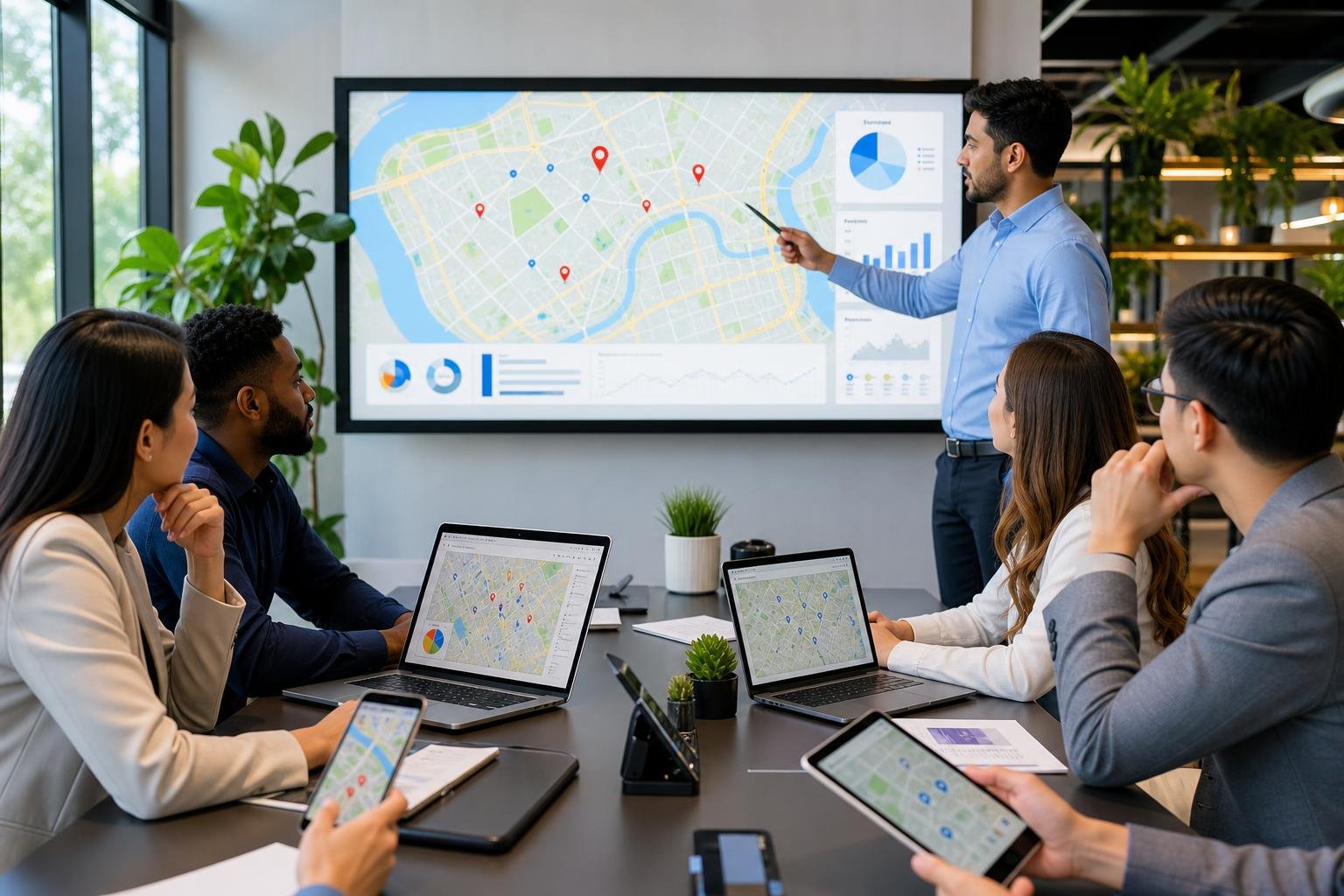
Google Maps is where local buying decisions start. The local 3-pack, search intent, and how Google surfaces nearby businesses all mean visibility equals revenue for local companies.
How The Local 3-Pack Captures High-Intent Searches
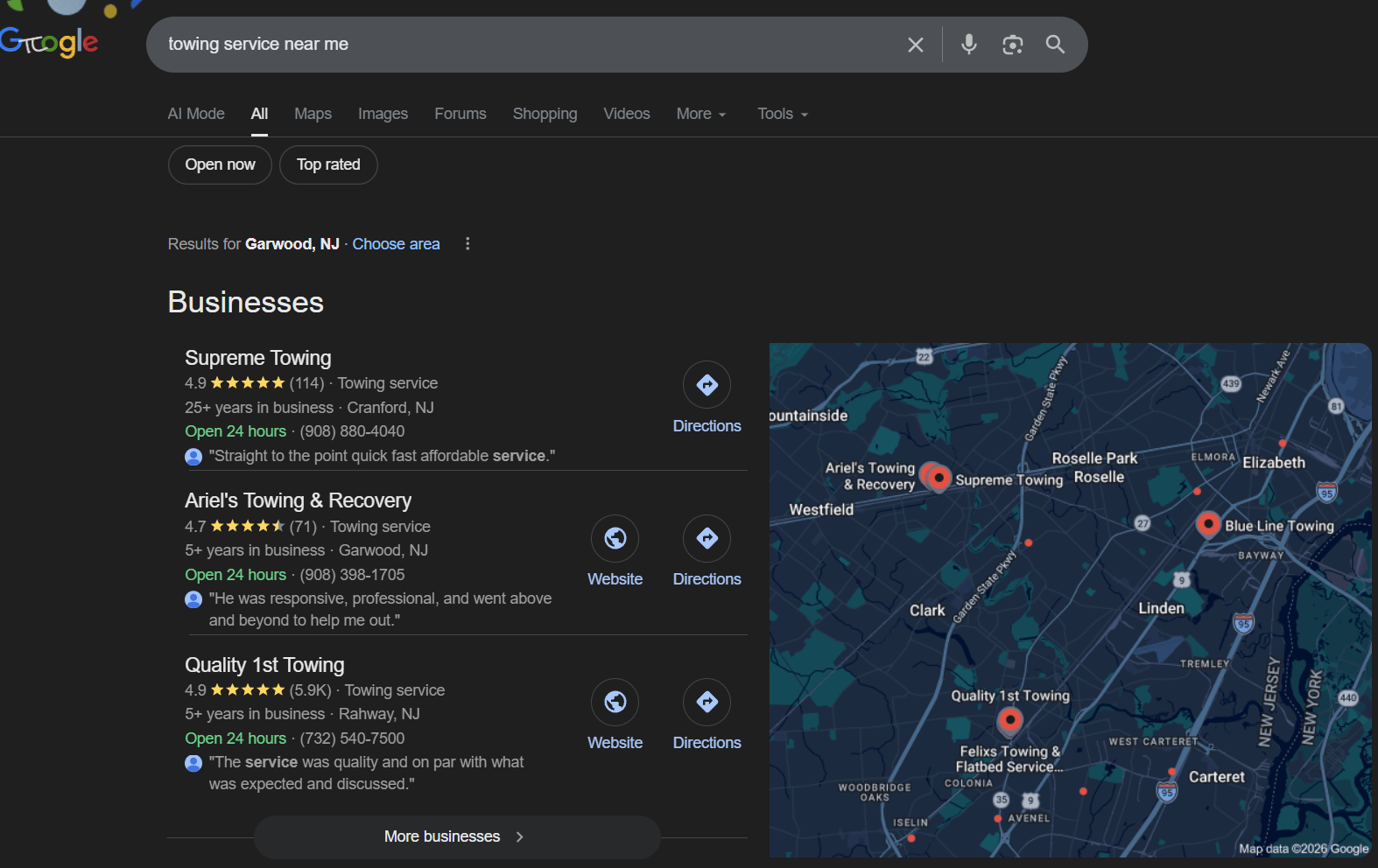
The local 3-pack is those three business listings at the top of Google’s results when someone searches with local intent, like “plumber near me” or “dentist in Lake Jackson.” These three spots get most of the clicks because they show up above regular search results and display a map, reviews, phone numbers, and directions.
As Mettevo explains, ranking high in the map pack puts a business right where users click first. The people searching these terms aren’t just browsing—they need something, they’re close by, and they’re ready to act.
Why Google Maps Often Beats Traditional Organic Results
Organic search still matters, but Google Maps listings give local businesses some unique advantages. They show contact info, hours, reviews, and directions right there, so people don’t even have to click through to your website.
For service businesses, customers can call straight from the listing. Hook Agency’s analysis of Google Maps ROI found that Maps results usually convert better than standard organic listings because people searching are local and ready to take action.
How Local Visibility Turns Into Calls, Clicks, And Visits
Local search visibility isn’t just a vanity metric. It directly leads to Google Business Profile actions—calls, direction requests, website clicks, and messages.
When a business keeps showing up in the 3-pack for its main services, those actions stack up fast. More visibility means more reviews, more trust, and more clicks. That’s why local SEO delivers such a strong ROI for small businesses.
What A Specialist Actually Improves
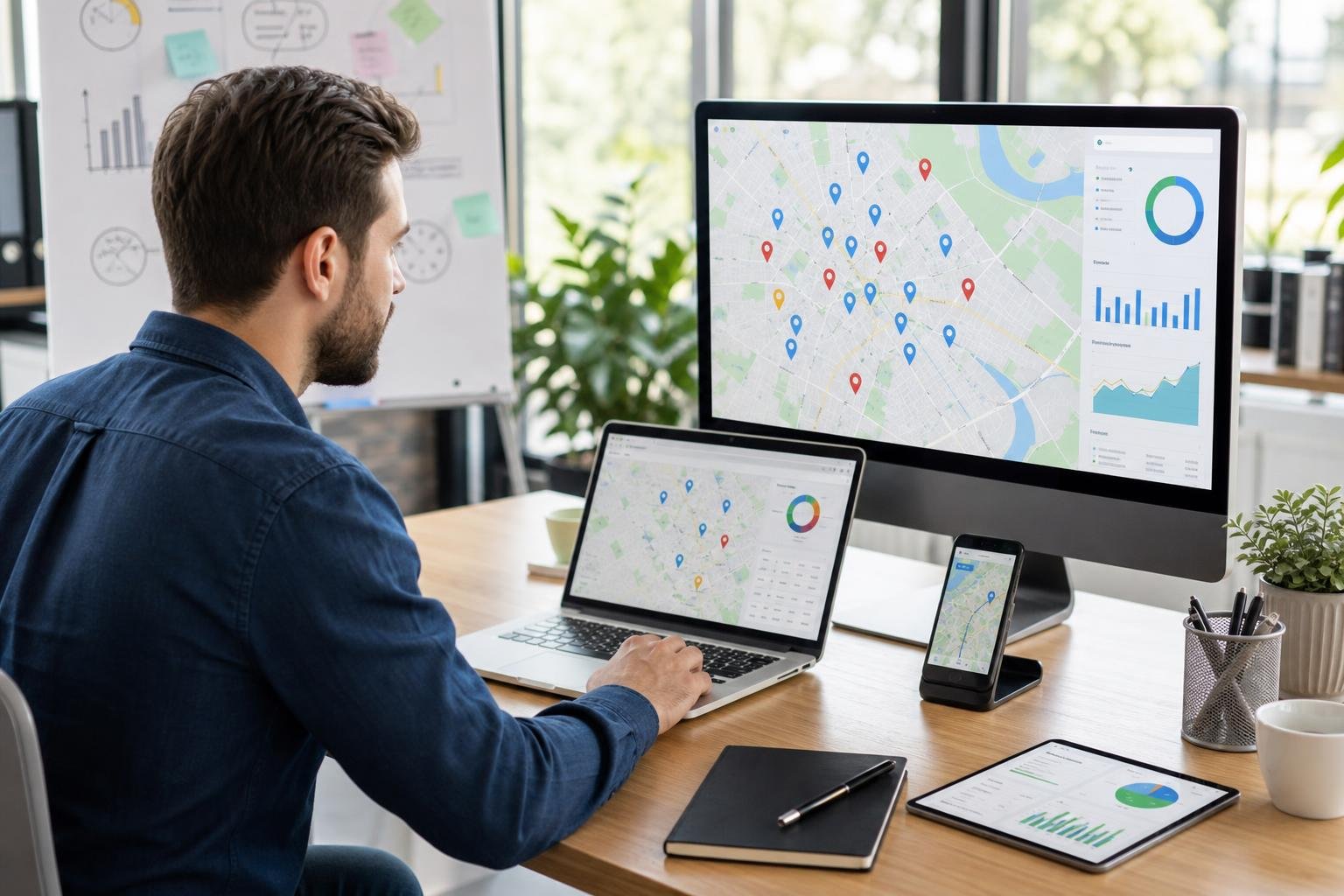
A Google Maps SEO specialist does way more than just fill out your Google Business Profile. They tie together profile optimization, citation accuracy, website signals, and ongoing engagement to actually earn visibility.
Google Business Profile Optimization Beyond Basic Setup
Most business owners claim their Google Business Profile and fill out the basics—name, address, phone, hours, and a short description. A specialist goes much further.
They pick the right categories, write keyword-rich descriptions, add detailed service listings, upload geotagged photos regularly, and post Google Updates on a schedule. ALM Corp points out that category selection and profile completeness are top ranking factors, according to tons of local SEO experts.
They’ll also use structured data and schema markup on your website so Google can connect your listing to your web presence more accurately.
Business Listings, Local Citations, And NAP Consistency
NAP stands for name, address, and phone number. Google checks this info across dozens of directories and listings. Even small inconsistencies confuse search engines and can hurt your rankings.
A specialist will audit and fix citations across Yelp, Apple Maps, Bing Places, Facebook, industry directories, and data aggregators. Cube Creative’s breakdown says citation consistency is still a core ranking signal for the map pack, and gaps or mismatches can drag down your profile.
Website Signals That Support Map Pack Rankings
The website linked to your Google Business Profile matters more than most business owners think. Google looks at your site’s relevance, authority, mobile experience, page speed, and how well your content matches your profile’s services.
Fixing broken links, speeding up load times, adding location pages, and using local schema markup all boost your relevance signals. A specialist makes sure your website actually helps your profile, not hurts it.
Reviews, Photos, Posts, And Ongoing Engagement
Google loves profiles that stay active. Adding fresh photos, getting new reviews, posting updates, and responding to customers all show Google you’re engaged.
Managing reviews is huge. It means encouraging happy customers to leave feedback, replying to every review (good or bad), and watching for trends in your ratings. Orange Monke says handing review management to a pro lets owners focus on their business while keeping this ranking factor strong.
10 Reasons Businesses Hire A Google Maps SEO Expert
There are solid, measurable reasons why businesses bring in outside help for local search. Each one connects to outcomes that actually move the needle—like more leads, lower costs, and steady growth.
To Build A Stronger Local SEO Strategy
An expert builds a strategy that connects everything—profile optimization, website content, citations, reviews, and local link building—into one plan. Without this, businesses often fix one thing and forget the rest, so results stall out.
Strategy also means picking the right areas to target. Tools like geo-grid analysis and drive-time mapping show exactly where to focus for the best ROI. It’s a lot smarter than just targeting a city and hoping for the best.
To Improve Search Rankings In Competitive Areas
Some industries and markets are just brutal in local search. Tons of businesses are fighting for those same three spots in the local pack. Surface-level optimization isn’t enough here.
A specialist will reverse-engineer what competitors are doing, find gaps, and go after keywords and content they’re missing. Merchynt’s guide says businesses using expert strategies have seen traffic jump by over 100% thanks to competitive analysis and smart profile optimization.
To Save Time And Avoid Trial-And-Error
Running a business is already a full-time job. Learning Google’s local search algorithm, tracking rankings, updating listings, handling reviews, and making content—it eats up hours every week.
Orange Monke points out that DIY SEO often means months of trial and error before you see results. That delay can cost more than just hiring an expert from the start.
To Fix Technical Issues That Hold Back Visibility
Technical problems on your website or Google Business Profile can quietly hurt your rankings. Broken links, slow pages, duplicate listings, wrong categories, missing schema, and mobile issues all get in the way.
A specialist will do a full audit to catch things most business owners would miss. Fixing these often leads to quick ranking improvements, sometimes even without extra content or links.
To Target Better Local Keywords And Buyer Intent
Local SEO keyword research isn’t like general SEO. It’s about finding the exact terms local customers use when they’re ready to buy—not just browsing.
An expert finds those buyer-intent keywords, maps them to your service pages and profile, and makes sure you show up for the searches that actually turn into calls and appointments. Chasing generic keywords just wastes resources and lowers your conversion rate.
To Increase Click-Through Rate And Conversion Rates
Ranking in the map pack is just the start. Your listing still has to earn the click, and your website has to convert that visitor into a lead.
Click-through rate depends on reviews, photo quality, business description, and how you stack up against competitors. On the website, conversion optimization means clear calls to action, fast pages, and content that matches what people are searching for. When Maps and your website work together, the whole process improves.
To Manage Reviews And Reputation More Consistently
Reviews sway both rankings and customer choices. A steady stream of fresh, positive reviews builds trust, while ignored negative feedback drives people away.
An expert sets up systems to encourage reviews, watches for new feedback, writes professional responses, and looks for patterns that might show service issues. Birdeye’s guide says review speed, recency, and response rates all matter for Google’s map pack rankings.
To Track Performance With Better Analytics
Basic analytics only scratch the surface. A specialist connects Google Business Profile actions (calls, clicks, direction requests) to real-world business outcomes.
They’ll use Google Analytics, Search Console, and geo-grid reporting to measure visibility across your whole service area—not just one spot. This lets you make actual decisions from your data. If a service area isn’t performing, you can shift your strategy. If a competitor starts gaining, you can respond fast.
To Reduce Waste From PPC-Only Dependence
Lots of small businesses lean hard on pay-per-click ads for leads. PPC brings fast results, but you pay for every click, and those costs creep up as more competitors jump in.
Google Maps SEO builds organic visibility that keeps generating leads without a per-click fee. If you can land a spot in the local 3-pack, you won't have to rely as much on paid ads, and your customer acquisition costs drop.
Honestly, PPC and local SEO work best together. But sticking with PPC alone? That's just not realistic for most small businesses in the long run.
To Improve Return On Investment Over Time
Local SEO is one of those investments that keeps paying off. Work you do in the first month—like optimizing your profile, cleaning up citations, writing content, or fixing technical stuff—brings results for months, maybe even years.
Unlike ads that vanish the second your budget dries up, a solid local SEO setup keeps working in the background. A good expert will actually connect your improved visibility to real business wins: more calls, more appointments, more revenue.
How To Tell If You Need Outside Help
Not every business needs a specialist right away. Still, there are some clear signs your current approach isn’t cutting it. Spotting them early can save you a lot of hassle.
Signs Your In-House SEO Or DIY Effort Has Stalled
If you've been handling your Google Business Profile and local SEO for a while but calls, direction requests, or clicks haven’t budged, you’re probably stuck. Look out for things like:
- Rankings staying flat, even after regular updates
- Google Business Profile actions dropping month after month
- Competitors always above you in the Map Pack
- No clue which keywords actually drive your visibility
If your effort isn’t paying off anymore, it’s probably time for outside help. WebCitz calls out stalled traffic and rankings as a top sign you need professional SEO support.
Red Flags In Your Listing, Website, Or Review Profile
Some problems need urgent attention. These red flags can really drag down your visibility:
- Inconsistent NAP info across directories
- Duplicate Google Business Profiles for one location
- Almost no recent reviews, or unanswered negative reviews piling up
- Slow, non-mobile-friendly website linked to your profile
- Missing or wrong business categories on your profile
- No schema markup on your site
Any of these can hurt your rankings, no matter how solid the rest of your strategy might be. A specialist will spot and fix these fast.
Questions To Ask Before Hiring Any Provider
Before you pick a local SEO provider, ask them straight-up questions:
- What improvements should I see in 30, 60, and 90 days?
- How do you measure and share results?
- Will you show me exactly what you’re changing on my profile and site?
- Have you worked with businesses in my industry or area?
- What tools do you use to track visibility in my trade area?
If a provider gives vague answers, promises guaranteed #1 rankings, or can’t explain their process, that’s a red flag. ER Marketing Group’s partner evaluation guide says the right partner stays transparent about both their strategy and their timelines.
What Good Reporting And Strategy Should Look Like
Strong local SEO always leans on data. The real difference between a so-so provider and a great one is how they measure performance, what tools they use, and how they tweak strategy as things change.
Metrics That Matter More Than Vanity Rankings
Ranking for a keyword from just one spot on the map doesn’t tell the whole story. You might be #1 from your office, but #15 from a few miles away.
The most important local SEO metrics include:
| Metric | Why It Matters |
|---|---|
| Google Business Profile actions (calls, clicks, directions) | Shows real customer engagement |
| Keyword visibility across your service area | Reveals your true reach |
| Click-through rate from search results | Measures how appealing your listing is |
| Conversion rate on landing pages | Shows if your traffic actually turns into leads |
| Review volume, recency, and average rating | Impacts both rankings and customer trust |
| Organic traffic from local search terms | Tracks your growth in free visibility |
Vanity stats like total impressions or one keyword’s rank can be pretty misleading. Good reporting always ties visibility to actual business results.
How Geo-Grid, Competitor Analysis, And Drive-Time Insights Help
Geo-grid analysis lets you see your rankings across a grid of points in your whole trade area. This makes it clear where you’re visible—and where you’re not—so you can focus your efforts.
Looking at what top competitors are doing differently with categories, reviews, content, backlinks, and engagement can reveal what you’re missing. Drive-time mapping shows where your real customers come from, so you can prioritize those neighborhoods.
These tools take local SEO from guesswork to precision. Providers like SEO My Website Guru use geo-grid analysis, competitor insights, and drive-time mapping in their regular reporting.
Why Ongoing Adjustments Matter After Core Updates
Google rolls out core algorithm updates several times a year, and local rankings can shift a lot after each one. What worked before might not work after a big update.
Onward SEO points out that the March 2024 Core Update alone wiped out about 40% of previously ranking content. Local search isn’t immune. Providers who monitor and adapt quickly stand out—they’re the ones delivering results that last.
Choosing The Right Partner For Long-Term Results
The right local SEO partner should feel more like a strategic ally than just another vendor. As you collect more data and refine your approach, your relationship with them should get stronger.
What To Look For In A Local SEO Provider
The best providers all seem to have a few things in common:
- Proven results with businesses like yours
- Transparent strategy —they’ll actually explain what they’re doing
- Custom approach for your market, not some cookie-cutter plan
- Regular reporting that links activity to real outcomes
- Ongoing support —not just a one-and-done setup
Client testimonials and real case studies matter more than slick marketing. A 5-star Google rating, like SEO My Website Guru’s, is a good trust signal, but you want to see actual examples of client wins.
How Website Design, CRO, And Maps Performance Connect
Too many businesses treat their website and Google Maps profile as separate projects. That’s a missed opportunity. The site you link to from your Google Business Profile impacts map pack rankings through relevance, user experience, mobile speed, and local content.
A provider who ties website design, CRO, and Maps optimization together will get you better results. Conversion-focused web design means the traffic you earn from Maps actually becomes leads and customers—not just empty clicks.
Why Transparency, Timelines, And Guarantees Matter
Small businesses can’t afford to wait months for signs of progress. You need clear timelines, milestones you can measure, and honest updates—what’s working, what’s not.
Guarantees make a difference too. For example, SEO My Website Guru offers a 30-Day Results Guarantee: if you don’t see measurable improvement in visibility, keyword reach, or Google Business Profile actions in the first month, the next month’s free. Not every provider does this, but it shows real confidence.
Transparency also means plain language—no hiding behind jargon. Result First’s guide says to choose providers who share their process and keep you in the loop every step of the way.
Frequently Asked Questions
What measurable results can a local SEO specialist deliver for a Google Business Profile?
A specialist should help you get more Google Business Profile actions—things like calls, direction requests, website clicks, and discovery searches. You can track these right in your profile's dashboard and tie them to real results, like more appointments or new customers.
How does expert optimization improve visibility in the local map pack for competitive searches?
Experts boost map pack visibility by fine-tuning profile categories, building citation consistency, improving your website’s relevance, and managing reviews smartly. In tough markets, they’ll also use geo-grid analysis and competitor research to spot weak spots and target underserved areas in your trade zone.
Which on-profile elements most influence rankings, clicks, and calls from Maps listings?
Your primary category, review count and rating, business description, photos, and Google Posts all play big roles. Keeping your service list accurate, business hours complete, and activity regular also helps with both rankings and engagement.
How do reviews, review responses, and rating patterns affect local rankings and conversions?
Google looks at review volume, how recent they are, your average rating, and how you respond when ranking local businesses. A steady stream of new reviews and owner responses makes you look active and trustworthy. Ignoring negative reviews? That hurts both your rankings and customer trust.
What role do citations, NAP consistency, and local listings play in Maps performance?
Citations and NAP consistency are trust signals for Google. If your name, address, and phone number match everywhere—directories, aggregators, your website—Google trusts your listing more. Mismatches can drag down your rankings, even if everything else looks good.
When is it more cost-effective to hire an SEO agency versus managing local SEO in-house?
Hiring an agency usually makes more sense when your in-house SEO hits a wall. If you don't have access to solid professional tools or analytics, that's another sign it's time to call in the experts.
Honestly, if you're spending so much time on DIY SEO that it's eating into your actual business, the cost of an agency can feel worth it. Most small businesses see a return on investment from proper optimization pretty quickly—sometimes just a few months into a campaign.